
Nestled in the heart of the historic city of Kandy, Sri Dalada Maligawa, also known as the Temple of the Sacred Tooth Relic, is the most sacred Buddhist temple in Sri Lanka and one of the country's most iconic cultural landmarks. Located within the UNESCO-listed Sacred City of Kandy, this magnificent temple attracts millions of pilgrims and visitors every year who come to witness its spiritual atmosphere, remarkable Kandyan architecture, and centuries-old traditions. The temple houses the revered Sacred Tooth Relic of Lord Buddha, making it one of the holiest pilgrimage destinations in the Buddhist world. UNESCO recognized Kandy as a World Heritage Site in 1988 because of its exceptional cultural and religious significance.
For guests staying at Highland Grange Kandy Villa, a visit to Sri Dalada Maligawa is much more than another sightseeing activity. It is an opportunity to experience the living heritage of Sri Lanka while discovering the traditions, ceremonies, and royal history that shaped the island for centuries. Whether you are interested in history, architecture, photography, spirituality, or cultural exploration, the Temple of the Sacred Tooth Relic offers an unforgettable journey into the heart of Sri Lankan civilization.
In This Guide
Why Sri Dalada Maligawa is the Heart of Kandy
For more than four centuries, Sri Dalada Maligawa has remained the religious and cultural center of Kandy. The temple is located beside the historic Royal Palace complex and beautiful Kandy Lake, creating one of the most picturesque settings in Sri Lanka. The Sacred Tooth Relic is believed to symbolize both Buddhist faith and royal authority. Throughout Sri Lankan history, whoever possessed the Sacred Tooth Relic was considered the rightful ruler of the kingdom. Because of this belief, every Sinhala king carefully protected the relic and built magnificent temples wherever the capital moved.
Today, thousands of devotees gather daily to worship during the traditional Thewawa ceremonies, while international visitors admire the temple's elegant architecture and peaceful atmosphere. Walking through the beautifully decorated halls filled with golden carvings, ancient paintings, and traditional drumming creates an unforgettable experience that reflects the living traditions of Sri Lankan Buddhism.
The Temple of the Sacred Tooth Relic is not simply an ancient monument preserved for tourists. It continues to function as an active religious institution where centuries-old rituals are performed every day. This combination of living culture and historic significance makes it one of Asia's most remarkable spiritual destinations.
The Fascinating History of the Sacred Tooth Relic
The remarkable story of the Sacred Tooth Relic dates back more than 1,600 years and remains one of the most treasured narratives in Buddhist history. According to historical chronicles, after the Parinirvana of Lord Buddha, one of His sacred canine teeth was preserved in the ancient Kingdom of Kalinga in India. As political unrest threatened the safety of the relic, King Guhasiva entrusted it to his daughter, Princess Hemamala, and her husband, Prince Dantha, who secretly carried it to Sri Lanka hidden within Princess Hemamala's hair. Their courageous journey forever changed the religious and political landscape of Sri Lanka, establishing the Sacred Tooth Relic as the nation's most revered Buddhist treasure.
Arrival of the Tooth Relic in Sri Lanka
Historical records indicate that the Sacred Tooth Relic arrived in Sri Lanka during the reign of King Kithsirimevan (301–328 AD). The king welcomed the relic with great honor and enshrined it in a specially constructed shrine, recognizing it as both a sacred religious object and a symbol of legitimate royal authority. Over the following centuries, every Sinhala monarch ensured that the relic accompanied the kingdom whenever the capital shifted due to invasions or political changes. As capitals moved from Anuradhapura to Polonnaruwa, Dambadeniya, Yapahuwa, Kurunegala, Gampola, Kotte, and finally Kandy, new temples were built to safeguard the Sacred Tooth Relic. This enduring tradition demonstrates how deeply Buddhism was woven into the governance and identity of ancient Sri Lanka.
The present Sri Dalada Maligawa was constructed within the Royal Palace Complex of Kandy during the Kandyan Kingdom, where it continues to be protected and venerated today. Although the relic itself is never displayed publicly, it is housed inside a series of beautifully crafted golden caskets shaped like stupas. During daily ceremonies, devotees gather to pay homage to these sacred caskets while listening to the rhythmic sounds of traditional drummers and temple musicians. This centuries-old ritual creates an atmosphere unlike anywhere else in Sri Lanka, allowing visitors to witness living Buddhist traditions rather than simply observing historical artifacts.
The Kandyan Kingdom and Royal Legacy
The relationship between the Kandyan Kingdom and the Sacred Tooth Relic shaped the political history of Sri Lanka for generations. Possession of the relic symbolized the divine right to rule, meaning that protecting it became one of the king's highest responsibilities. Successive Kandyan monarchs expanded and beautified the temple complex with elaborately carved wooden halls, golden roofs, stone pathways, and decorative walls featuring traditional Kandyan motifs. Many of the magnificent structures visitors admire today—including sections of the Royal Palace and the famous Paththirippuwa (Octagonal Pavilion)—reflect the architectural brilliance of this royal era.
Even during periods of colonial invasion by the Portuguese, Dutch, and British, enormous efforts were made to ensure the Sacred Tooth Relic remained protected. The temple has survived wars, natural disasters, and even modern security threats while continuing to serve as Sri Lanka's foremost place of Buddhist worship. Today, Sri Dalada Maligawa stands not only as a sacred shrine but also as a powerful reminder of Sri Lanka's resilience, cultural identity, and unwavering devotion to preserving its heritage. For visitors staying at Highland Grange Kandy Villa, exploring this extraordinary history before walking through the temple gates creates a much deeper appreciation of why the Temple of the Sacred Tooth Relic remains the spiritual heart of the nation.
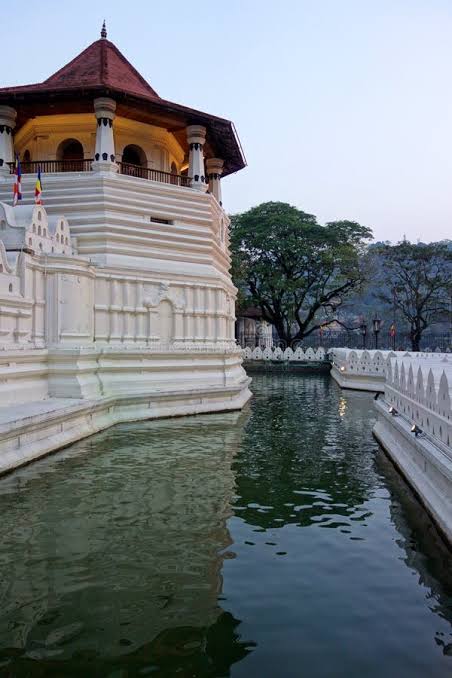
Exploring the Temple Complex
A visit to Sri Dalada Maligawa is much more than entering a single temple building. The entire complex is a masterpiece of Kandyan architecture, royal history, and religious devotion. Every courtyard, shrine, museum, and ceremonial hall tells a different chapter of Sri Lanka's story. The temple is beautifully positioned beside the scenic Kandy Lake, with the historic Royal Palace to the north and the lush Udawatta Kele Sanctuary nearby, creating one of the most breathtaking cultural landscapes in Sri Lanka.
As visitors walk through the entrance, they immediately notice the elegant stone carvings, moonstones, traditional guard stones, and intricately decorated wooden pillars that showcase the remarkable craftsmanship of ancient Kandyan artisans. The peaceful atmosphere is complemented by the gentle sounds of temple bells, devotional chanting, and traditional drumming that echo through the complex throughout the day. Whether you are visiting for religious purposes or simply exploring Sri Lanka's rich heritage, every corner of Sri Dalada Maligawa offers a memorable experience that blends history, culture, and spirituality into one unforgettable destination.
Main Shrine and the Sacred Chamber
The spiritual centerpiece of Sri Dalada Maligawa is the Inner Shrine, where the Sacred Tooth Relic is preserved inside a series of beautifully crafted golden caskets. The relic itself is never displayed publicly, making it even more sacred and revered among Buddhist devotees. During the three daily Thewawa ceremonies, worshippers gather in large numbers to witness the opening of the shrine doors, offer fragrant lotus flowers, and receive blessings while traditional drummers and temple musicians perform ancient ceremonial music. Although visitors cannot see the actual tooth relic, viewing the magnificent golden reliquary and participating respectfully in these rituals is one of the highlights of visiting Kandy.
The shrine is decorated with remarkable ivory carvings, golden ceilings, lacquer work, painted wooden beams, and finely detailed murals that reflect centuries of Kandyan artistry. Every decorative element symbolizes Buddhist teachings, compassion, and enlightenment, creating an environment where architecture and spirituality merge seamlessly. Visitors often describe the experience as peaceful, inspiring, and deeply moving regardless of their religious background. The respectful silence, interrupted only by devotional chanting and ceremonial drums, creates memories that remain long after leaving the temple.
The Royal Palace Complex
Adjacent to the temple lies the historic Royal Palace of Kandy, once home to the last Sinhala kings before the British colonial period. Several buildings within this palace complex have been carefully preserved and now provide valuable insight into the royal lifestyle, governance, and traditions of the Kandyan Kingdom. Walking through these historic structures allows visitors to understand how closely royal authority was connected with the Sacred Tooth Relic. Since possession of the relic represented the legitimate right to rule Sri Lanka, the temple and palace were intentionally constructed side by side, symbolizing the unity of religion and monarchy.
Among the most recognizable landmarks is the elegant Paththirippuwa, or Octagonal Pavilion. Originally built as a royal audience chamber, it later became closely associated with the temple and today serves as one of Kandy's most photographed architectural masterpieces. Its distinctive octagonal design, beautifully carved wooden balconies, and elevated position overlooking Kandy Lake make it one of the defining symbols of the city. Visitors can admire the pavilion while exploring the temple grounds or capture stunning photographs from several viewpoints around the lake.
Museums Within the Temple Grounds
The Temple of the Sacred Tooth Relic offers much more than religious worship. Several museums located inside the complex provide fascinating insights into Sri Lanka's Buddhist heritage and royal history. The Sri Dalada Museum displays ancient manuscripts, ceremonial objects, historical photographs, royal artifacts, and valuable documents that trace the remarkable history of the Sacred Tooth Relic through different kingdoms. Visitors can gain a deeper understanding of the political, cultural, and religious significance of the relic while exploring carefully curated exhibitions that bring Sri Lanka's history to life.
The nearby World Buddhist Museum showcases the global influence of Buddhism by presenting exhibits from numerous Buddhist countries, including Thailand, Japan, China, Myanmar, India, and several others. Interactive displays, traditional artworks, sculptures, and educational presentations demonstrate how Buddhist culture has evolved across different regions while maintaining its core teachings. Many foreign visitors are pleasantly surprised by the museum's modern presentation style, making it an excellent addition to any visit. Admission to these museums is included with the standard foreign visitor ticket, providing outstanding value while enriching the overall experience.
Daily Rituals and Religious Ceremonies
One of the most extraordinary aspects of visiting Sri Dalada Maligawa is witnessing religious traditions that have continued uninterrupted for centuries. Unlike historical monuments that remain unchanged, this temple is constantly alive with worship, prayer, and ceremonial activities. Every day begins before sunrise as monks, temple officials, and devotees prepare for the first Thewawa ceremony. These daily offerings are not staged performances for tourists but authentic religious observances that remain central to Sri Lankan Buddhist practice. Visitors who attend these ceremonies often describe them as the most memorable part of their journey through Kandy.
The temple follows a carefully maintained schedule of worship throughout the day, creating opportunities for both local devotees and international visitors to experience its spiritual atmosphere. The combination of fragrant flower offerings, rhythmic traditional drumming, sacred chanting, and beautifully decorated ceremonial halls creates an experience that appeals to every sense. Even travelers with little knowledge of Buddhism quickly appreciate the peaceful environment and deep cultural traditions preserved within these historic walls. For anyone staying at Highland Grange Kandy Villa, planning a visit during one of the daily ceremonies offers a far richer experience than simply touring the temple during quieter hours.
The Daily Thewawa Rituals
The temple conducts three daily Thewawa ceremonies, each performed with remarkable precision and reverence. These rituals take place during the early morning, mid-morning, and evening, allowing visitors multiple opportunities to witness the sacred traditions regardless of their travel schedule. During each ceremony, the doors to the inner shrine are ceremonially opened, and offerings of flowers, incense, and fragrant oils are presented before the golden caskets that house the Sacred Tooth Relic. Although the relic itself remains hidden from public view, devotees consider simply being present during these rituals to be an immense blessing.
The official ceremony schedule is as follows:
- Early Morning Thewawa — 5:30 AM – 7:00 AM
- Mid-Morning Thewawa — 9:30 AM – 11:00 AM
- Evening Thewawa — 6:30 PM – 8:00 PM
Every Wednesday, the temple also performs the special Nanumura Mangallaya, a sacred ritual during which a symbolic herbal preparation is ceremonially offered to the Sacred Tooth Relic. The fragrant water used in this ceremony is later distributed among devotees, who believe it carries blessings and spiritual significance. This weekly ritual attracts large numbers of pilgrims from across Sri Lanka and is considered one of the most meaningful ceremonies held at the temple.
Kandy Esala Perahera – Sri Lanka's Grandest Cultural Festival
Among all religious celebrations in Sri Lanka, none rivals the magnificence of the Kandy Esala Perahera. Held annually during July or August, this internationally renowned festival transforms the city of Kandy into a vibrant celebration of faith, tradition, and cultural heritage. Dating back centuries, the Perahera honors the Sacred Tooth Relic while also invoking blessings for peace, prosperity, and abundant rainfall. It is recognized as one of Asia's oldest and most spectacular religious processions, attracting hundreds of thousands of local and international visitors every year.
The festival features beautifully decorated elephants draped in elaborate embroidered garments, traditional Kandyan dancers, whip crackers, fire performers, drummers, and ceremonial officials dressed in colorful royal attire. The highlight of the procession is the majestic tusker carrying the golden casket (Karanduwa) that symbolically represents the Sacred Tooth Relic. Although the relic itself remains safely inside the temple, this symbolic casket allows devotees to pay homage during the procession. Watching the illuminated parade slowly wind through the historic streets of Kandy beneath thousands of lights is an unforgettable experience that showcases the rich artistic and spiritual traditions of Sri Lanka.
For guests staying at Highland Grange Kandy Villa, visiting during the Esala Perahera season offers an extraordinary opportunity to experience one of the world's greatest cultural festivals while enjoying comfortable accommodation just a short drive from the historic city center. Early accommodation reservations are highly recommended, as this period represents one of Kandy's busiest tourism seasons.
Architecture and Cultural Heritage
The beauty of Sri Dalada Maligawa extends far beyond its religious significance. The temple is widely regarded as one of the finest examples of traditional Kandyan architecture, combining elegant craftsmanship with symbolic Buddhist design. Every doorway, wooden pillar, painted ceiling, and carved stone reflects the remarkable artistic achievements of Sri Lanka's ancient craftsmen. Unlike many monumental structures built solely for grandeur, the Temple of the Sacred Tooth Relic was designed to inspire peace, devotion, and harmony, qualities that remain evident throughout the complex today.
Walking through the temple grounds reveals an extraordinary balance between architecture and nature. Decorative walls featuring the famous cloud wall (Walakulu Bamma) and water wave wall (Diyareli Bamma) surround the complex, while intricately carved moonstones, guard stones, and lotus motifs welcome visitors at every entrance. The magnificent Paththirippuwa (Octagonal Pavilion), once used by the Kandyan kings, has become one of Sri Lanka's most recognizable architectural landmarks and stands as a symbol of the city's royal heritage. The temple's harmonious blend of wood, stone, ivory, brass, and gold demonstrates the exceptional skill of Kandyan artisans whose work continues to inspire architects and historians alike.
Kandyan Architectural Style
The architectural beauty of Sri Dalada Maligawa represents the finest achievements of the Kandyan Kingdom, blending elegance, symbolism, and craftsmanship into one extraordinary religious monument. Unlike massive stone temples found elsewhere in Asia, the Temple of the Sacred Tooth Relic was designed to harmonize with the surrounding landscape while reflecting Buddhist values of simplicity, balance, and serenity. Every section of the complex—from the grand entrance to the sacred inner shrine—demonstrates the exceptional skills of ancient Sri Lankan craftsmen who worked with wood, stone, gold, silver, bronze, and ivory. The temple's design also reflects the architectural traditions used in earlier Dalada Mandira (Shrines of the Tooth Relic) built in former royal capitals, preserving centuries of artistic evolution in one sacred location.
Visitors first enter through the impressive Maha Wahalkada (Main Entrance), where beautifully carved moonstones (Sandakadapahana) and traditional guard stones welcome pilgrims into the sacred grounds. Beyond the entrance lies the distinctive Diyareli Bamma (Wall of Water Ripples) and Walakulu Bamma (Wall of Clouds), decorative walls that symbolize purity and protection while creating one of the temple's most recognizable architectural features. The iconic Paththirippuwa (Octagonal Pavilion), constructed by King Sri Wickrama Rajasinghe in the early nineteenth century, remains one of Kandy's defining landmarks. Once used by the king to address his people, the pavilion now houses an important collection of ancient palm-leaf manuscripts and serves as an enduring symbol of Sri Dalada Maligawa.
The temple's layout was carefully planned around the Sacred Tooth Relic, ensuring that every structure contributes to the spiritual experience of visitors. Traditional wooden pillars, ornamental ceilings, lacquered doors, and intricately carved balconies showcase the remarkable craftsmanship of Kandyan artisans. Unlike modern buildings that often emphasize scale over detail, every decorative element within the temple has religious symbolism, reminding visitors of Buddhist teachings while preserving the artistic heritage of Sri Lanka. Even after several centuries, the temple continues to inspire architects, historians, photographers, and pilgrims who admire the timeless beauty of Kandyan design.
Ancient Artwork and Traditional Craftsmanship
One of the most fascinating aspects of Sri Dalada Maligawa is its extraordinary collection of traditional artwork that has survived generations of political change, colonial rule, and natural disasters. Throughout the temple, visitors encounter colorful murals depicting scenes from the Jataka Tales, which recount the previous lives of Lord Buddha and teach important moral lessons. These paintings not only decorate the walls but also serve as visual storytelling, allowing worshippers and visitors to understand Buddhist philosophy through art. Rich natural pigments, intricate detailing, and balanced compositions demonstrate the advanced artistic knowledge possessed by Sri Lankan craftsmen centuries ago.
The interior of the temple is equally breathtaking. Delicate ivory carvings, gilded ceilings, handcrafted wooden doors, bronze decorations, and elaborate floral motifs combine to create an atmosphere of elegance and devotion. The sacred chamber itself is protected by beautifully decorated golden doors, while the reliquary containing the Sacred Tooth Relic is enclosed within a series of nested golden caskets adorned with precious gemstones. According to temple tradition, these caskets symbolize the immeasurable value and sanctity of the relic they protect. Every carving, painting, and decorative panel has been created with deep spiritual intention rather than simple ornamentation, making the temple one of Sri Lanka's greatest artistic treasures.
Walking through the temple complex feels like exploring a living art gallery where history continues to breathe through every surface. Unlike museums where artifacts remain behind glass, the artistic heritage of Sri Dalada Maligawa continues to serve its original purpose within daily religious life. This living connection between art, architecture, and worship makes the temple an extraordinary destination for travelers interested in culture, photography, architecture, and history alike. Every carefully preserved detail reflects Sri Lanka's enduring commitment to protecting one of its most precious cultural landmarks.
Visitor Information
Planning your visit to Sri Dalada Maligawa in advance will help you enjoy a smooth and meaningful experience. Since the temple is one of Sri Lanka's holiest religious sites, visitors are expected to respect local customs and temple etiquette throughout their visit. Fortunately, the temple provides excellent facilities for international travelers, including information services, shoe storage, security, guided assistance, and museum access. Guests staying at Highland Grange Kandy Villa can easily reach the temple within a short drive, making it convenient to attend the morning or evening ceremonies before exploring other attractions around Kandy.
Opening Hours, Dress Code, and Entry Information
The Temple of the Sacred Tooth Relic welcomes visitors every day from 5:30 AM until 8:00 PM, allowing ample time to participate in daily worship ceremonies or simply admire the historic surroundings. The most popular visiting times coincide with the three daily Thewawa rituals, when the temple becomes filled with devotees carrying lotus flowers and offerings. Early morning visits provide a peaceful atmosphere with fewer crowds, while evening ceremonies create a particularly beautiful ambiance as traditional drumming echoes through the temple halls.
Visitors should dress modestly out of respect for this sacred place. Shoulders and knees must be covered, and hats should be removed before entering the temple grounds. Shoes must also be removed before entering the sacred areas, with secure shoe storage available near the entrance. Photography is permitted in many outdoor areas but should always be carried out respectfully, avoiding flash photography where prohibited and never disturbing worshippers during ceremonies. Following these simple guidelines ensures a respectful visit while helping preserve the peaceful atmosphere that defines Sri Dalada Maligawa.
Photography Guidelines
Photography is one of the most popular activities at Sri Dalada Maligawa, as the temple offers countless opportunities to capture Sri Lanka's cultural beauty. The golden roofs, traditional architecture, colorful flower offerings, historic buildings, and peaceful surroundings create incredible scenes for photographers. However, visitors should remember that this is an active place of worship, not simply a tourist attraction. Taking photographs should always be done respectfully, ensuring that religious ceremonies, monks, and devotees are not disturbed.
Visitors should avoid using flash photography inside sacred areas, especially near the shrine rooms and during important rituals. Some areas may have restrictions to protect ancient artwork and maintain the sanctity of religious spaces. Professional photography, commercial filming, or drone photography may require special permission from temple authorities. By following these guidelines, travelers can preserve their memories while respecting the spiritual importance of this remarkable heritage site.
Travel Tips for Visiting Sri Dalada Maligawa
A well-planned visit can make your experience at the Temple of the Sacred Tooth Relic even more enjoyable. Since Kandy is one of Sri Lanka's busiest cultural destinations, choosing the right time, preparing suitable clothing, and understanding local customs will help you explore the temple comfortably.
- Visit early morning or evening: These times usually provide a calmer atmosphere and allow you to experience the traditional ceremonies.
- Wear comfortable clothing: Since shoes must be removed and the temple grounds involve walking, comfortable footwear is recommended.
- Carry small cash: Donations, flower offerings, and local purchases are easier with smaller Sri Lankan currency notes.
- Respect local traditions: Speak quietly, avoid touching religious objects, and follow instructions from temple staff.
- Combine your visit with nearby attractions: Kandy Lake, the Royal Botanical Gardens, Udawatta Kele Sanctuary, and traditional cultural performances are located close to the temple.
The best way to experience Kandy is not to rush from one attraction to another but to slow down and appreciate the city's unique atmosphere. The Temple of the Sacred Tooth Relic represents centuries of faith, history, and artistic achievement, and allowing enough time for exploration will make your journey much more meaningful.
Staying Near Sri Dalada Maligawa
Choosing the right accommodation can greatly enhance your Kandy travel experience. A comfortable place to relax after exploring historic attractions allows you to fully enjoy the city's natural beauty and cultural heritage. While many visitors spend only a few hours in Kandy, staying overnight gives you the opportunity to experience the city during quieter moments, including peaceful mornings beside Kandy Lake and the magical atmosphere created by evening temple ceremonies.
Why Choose Highland Grange Kandy Villa
A visit to Kandy is about experiencing more than sightseeing. It is about enjoying the peaceful mountain atmosphere, discovering local traditions, and creating unforgettable travel memories. Highland Grange Kandy Villa provides the perfect environment for guests who want to experience the charm of Kandy while enjoying modern comfort.
After spending time exploring the historic Temple of the Sacred Tooth Relic, guests can return to a relaxing villa environment surrounded by the beauty of Sri Lanka's central highlands. The peaceful setting allows visitors to escape the busy city atmosphere while remaining close enough to enjoy Kandy's cultural attractions.
- Peaceful hill-country surroundings away from crowded city areas.
- Comfortable accommodation designed for relaxation after cultural exploration.
- Easy access to Kandy attractions, including Sri Dalada Maligawa.
- A personalized travel experience where guests can enjoy the beauty of Kandy at their own pace.
Staying at Highland Grange Kandy Villa also allows visitors to explore Kandy beyond the famous temple. Guests can discover hidden viewpoints, enjoy scenic mountain roads, taste authentic Sri Lankan cuisine, and experience the warm hospitality that makes the hill capital so special.
Stay Near the Temple
Highland Grange sits in the Hantana hills above Kandy — close enough for the temple ceremonies, far enough for a quiet night's sleep.
Reserve a StayConclusion
Sri Dalada Maligawa, the Temple of the Sacred Tooth Relic, is more than a historical monument—it is the spiritual heartbeat of Sri Lanka and one of the world's most remarkable cultural destinations. From the legendary journey of the Sacred Tooth Relic to the traditions of the Kandyan Kingdom, every part of the temple tells a story of faith, resilience, and national identity.
The temple's magnificent architecture, ancient artwork, daily ceremonies, and world-famous Kandy Esala Perahera demonstrate the incredible cultural heritage preserved within its walls. Visitors are not simply viewing history; they are experiencing a living tradition that continues after more than sixteen centuries.
For travelers staying at Highland Grange Kandy Villa, visiting Sri Dalada Maligawa offers the perfect opportunity to connect with the heart of Kandy. The combination of spiritual discovery, breathtaking architecture, and peaceful hill-country accommodation creates an unforgettable journey through Sri Lanka's cultural landscape.
Whether you are a history enthusiast, a spiritual traveler, a photographer, or someone searching for authentic experiences, the Temple of the Sacred Tooth Relic deserves a place at the top of your Sri Lanka travel itinerary. A visit to Kandy is incomplete without experiencing this extraordinary symbol of devotion, heritage, and timeless beauty.
Frequently Asked Questions
1. What is Sri Dalada Maligawa famous for?
Sri Dalada Maligawa is famous for housing the Sacred Tooth Relic of Lord Buddha, one of the most important Buddhist relics in the world. The temple is considered the most sacred Buddhist site in Sri Lanka and represents the country's religious and cultural identity.
2. How far is Sri Dalada Maligawa from Highland Grange Kandy Villa?
The distance between Highland Grange Kandy Villa and Sri Dalada Maligawa depends on the exact villa location and route conditions. Generally, guests can conveniently travel to the temple by car or tuk-tuk while enjoying the scenic beauty of Kandy's hill country roads.
3. What is the best time to visit the Temple of the Sacred Tooth Relic?
The best times to visit are early morning and evening when visitors can experience the traditional Thewawa ceremonies. These periods also offer a more peaceful atmosphere compared with busy daytime hours.
4. Is there a dress code for visiting Sri Dalada Maligawa?
Yes. Visitors should dress respectfully by covering their shoulders and knees. Shoes must be removed before entering sacred areas, and hats should be taken off inside the temple premises.
5. Why should travelers include Sri Dalada Maligawa in their Kandy itinerary?
Sri Dalada Maligawa offers a unique opportunity to experience Sri Lanka's history, religion, architecture, and traditions in one location. It is not only a famous attraction but also a living symbol of the country's cultural heritage.